
Sources for San Jacinto Previous Residents
A house history needs a time ladder. The recorder is strongest for title parties. Directories and census schedules are stronger for household context. Permits date physical work. Maps help reconcile streets and footprints. Obituaries, cemetery records, and probate can close a trail when a past resident died or an estate changed hands. The table keeps those source roles separate.
| Source | Years it covers | Where held | What it shows |
|---|---|---|---|
| Riverside recorder web index | January 1, 1974 forward stated | Riverside ACR online | Parties, type, date, document number |
| Older deed books and indexes | County creation in 1893 and predecessor trail; series varies | Gateway Riverside and archives | Grantor, grantee, recorded instruments |
| Assessor property map | Current; historical retention unstated | Web, map, office terminal | APN, owner or mailing and situs clues, values |
| Directories and reverse directories | Exact San Jacinto runs not located | RCLS, Riverside library, museum inquiry | Listed household or occupant by edition |
| Federal census | Public through 1950 | NARA, FamilySearch, library databases | Household, age, birthplace, occupation, tenure |
| Permits and Sanborn maps | Current permit channel; local map editions need verification | City, LOC, libraries | Work dates, footprint, use, street context |
Start with the source closest to the question. A deed answers ownership. A directory answers a listed name at an edition date. A census answers an enumerated household. Previous residents emerge from the overlap, not from one row.
San Jacinto Previous-Resident APN
Run the current address through Map My County and Riverside assessor property information. Copy the APN, situs, mailing address, legal or subdivision clue, map reference, and owner string exactly as displayed. Situs is the physical land. Mailing is where an assessment notice goes. A different mailing address may reflect a trust, entity, PO box, manager, or owner elsewhere.
Map My County can search by address, APN, place, or legacy Thomas Brothers map page. Turn on parcel layers, identify the subject polygon, and save the jurisdiction and adjacent parcel context. The assessor’s public-service computers and microfiche can add an office channel when the web view does not expose a needed ownership field.
Use the Riverside assessor services for property and map orientation. The current APN is the hinge between a modern San Jacinto address and an older title record.
Note: Keep the owner string, mailing address, situs, APN, and legal description in separate notebook fields before tracing previous residents.
Tracing San Jacinto Previous Owners
The deed chain runs from a current grantee to an earlier grantor, then treats that seller as a prior grantee. A grantor transfers an interest. A grantee receives it. A chain of title is the sequence of recorded instruments used to connect ownership claims to the same land. The legal description is the lot, block, subdivision, or metes-and-bounds description that can outlast a street label.
- Search the current owner or grantee in Riverside’s recorder index, narrowing by date, document type, APN, and legal description.
- Record the acquisition instrument’s grantor, grantee, recording date, document number, and legal description.
- Search that grantor as an earlier grantee, testing trust, entity, spouse, married-name, and spelling variants.
- Repeat backward while reconciling each instrument to the same lot, block, subdivision, APN, or map.
- At the online cutoff, move to Gateway Riverside books or a staff search with an estimated year and a narrow request.
- Grantor
- The party shown as transferring or releasing an interest in the recorded instrument.
- Grantee
- The party receiving an interest or benefit described by the instrument.
- Chain of title
- A linked sequence of recorded transfers tied to the same land description.
- Legal description
- The recorded land description that supports continuity when a street number changes.
Riverside’s official-record search is free at the index level. Copies cost $8 for the first page, $1 for added pages, and $2 for certification. The Riverside Official Records Search is the online starting point.
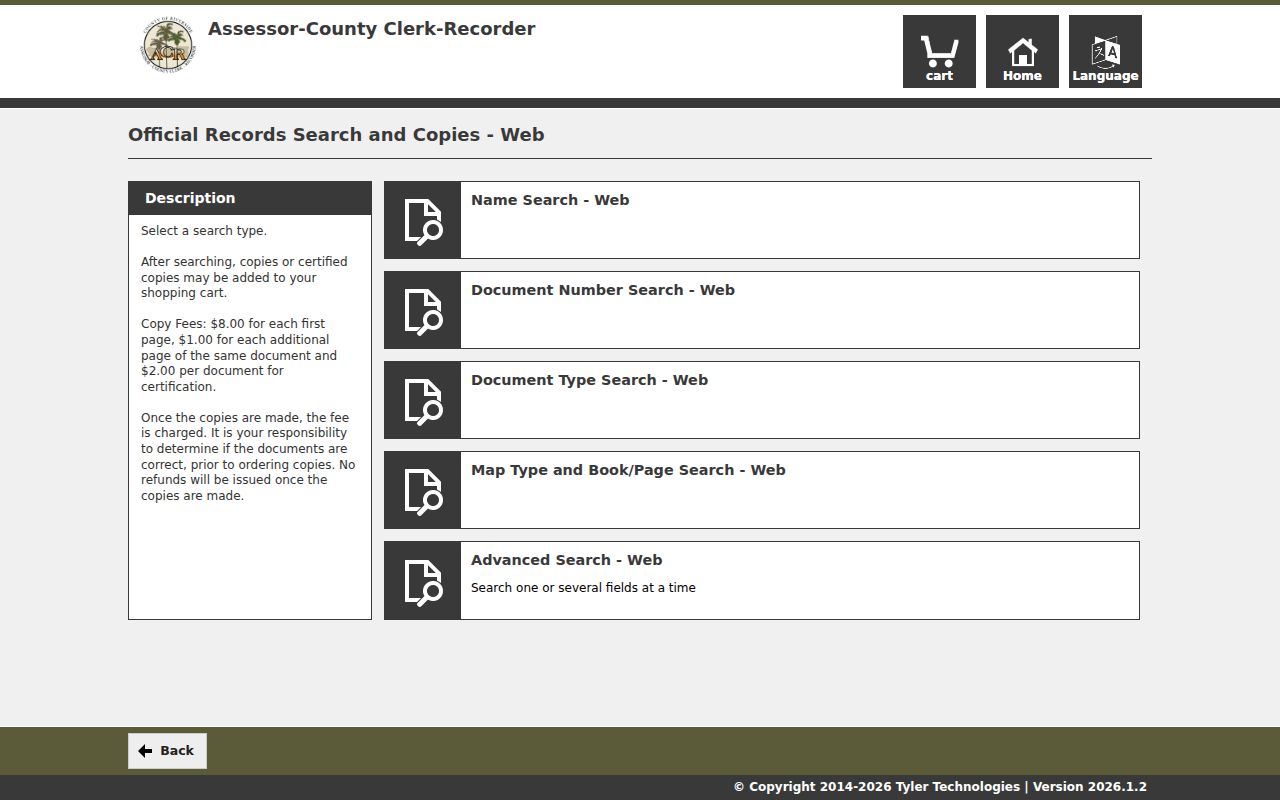
The recorder image shows the indexed search path. It is a finding aid; the instrument copy must be ordered and read for the actual legal description and party roles.
San Jacinto Previous-Resident Cutoff
The most important numerical break in a San Jacinto house history is the recorder’s online start. The live document-search description states recorder documents from January 1, 1974 forward. The copy guidance says office computers reach 1975 and records from 1974 or earlier require Gateway Riverside. Treat 1974 as the online index start and confirm the boundary with staff before promising a complete year.
Older research is not a dead end. Give Gateway staff the exact or approximate year, all known parties, instrument type, APN, and legal description. For pre-1976 mail searches, the county limits the requested search to two years after the estimated year. A narrow request is more useful than asking for every deed tied to a street.
The Riverside document search page and copy instructions describe the online and older-record routes.
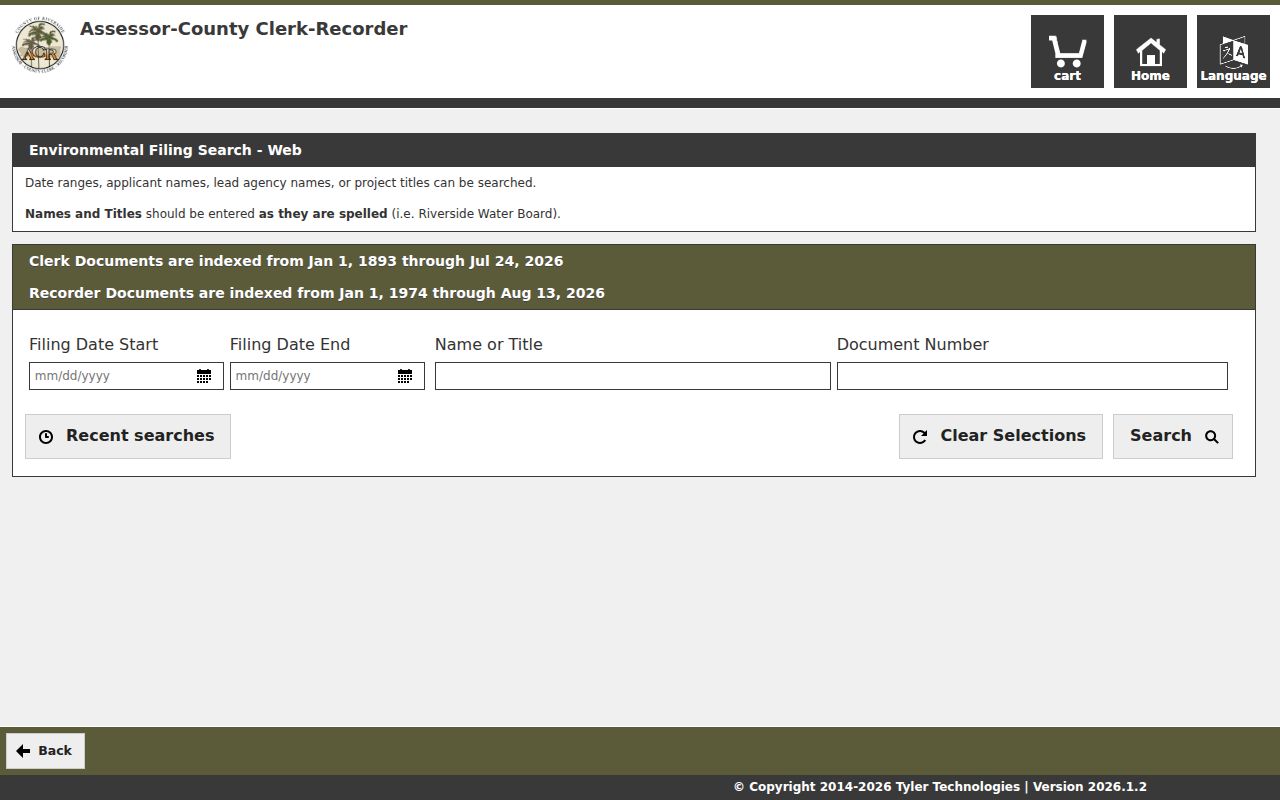
The grantor-grantee view helps preserve the exact name and date fields needed when the trail reaches older books.
San Jacinto Previous-Resident Legal Descriptions
Street names and numbers can change. Preserve lot, block, subdivision, map-book page, APN, and metes-and-bounds language at each deed step. Compare the address with the parcel polygon, recorded map, Sanborn sheet, and nearby landmarks before deciding that two strings describe the same place.
No official source verified a citywide San Jacinto renumbering year. That gap should remain visible. The safest bridge is the land description, supported by a later assessor map or recorder instrument. A postal ZIP can also change or cross a boundary, so it is a weaker continuity clue than an APN or subdivision.
Insider tip. Write the legal description down before searching an older name index. It can survive an address change that defeats a literal street search.
San Jacinto Past Residents and Owners
Previous residents include more than recorded owners. A deed names parties to land instruments. A directory or census can name a household at a particular date. A permit identifies an applicant or contractor. An obituary identifies a death and family relationships. A mailing address identifies where a notice went. Each record has a role, and that distinction keeps a previous residents search honest.
Owner mailing and situs may match, but that only supports an owner-location clue. Assessment data does not list every household member. Public maps do not expose utility or delivery accounts. A reverse directory may omit an unlisted person. A census is historical and tied to enumeration timing. The previous-resident question is strongest when at least two sources agree on address, date, and identity.
Keep a confidence ladder: certified instrument or court copy, custodian index with stable number, two independent official records, directory or obituary, map or postal match, then a same-name lead. Do not promote a lower rung without new evidence.
Past San Jacinto Households by Edition
Directories and census schedules supply the household layer of a previous-residents search. The exact San Jacinto city-directory and reverse-directory runs were not verified, so begin with the catalog and local shelf inquiry described in the San Jacinto directory book page. When a volume is found, copy the title page, scope, edition year, page, name entry, address, spouse notation, occupation, and street-order clues.
- Choose the nearest verified directory edition and record the name and address without standardizing its spelling.
- Search forward and backward across available editions, noting moves, new householders, widow marks, and gaps.
- Pair the edition with the closest public census year and compare household names, ages, birthplace, occupation, and tenure.
- Use maps, permits, newspapers, school yearbooks, and deeds to test whether a gap reflects a move or a changed address.
- Attribute every clue to its publication or custodian and stop when the collection is not public.
The latest public census schedule in 2026 is 1950 under the 72-year rule. Later household gaps need local records, newspapers, family material, or a verified directory edition. A directory year is a snapshot, not a continuous log of every previous resident.
San Jacinto Previous-Resident Maps
San Jacinto’s 1899 and 1918 earthquake context makes map and permit comparison a useful research lead. The research does not assign a specific rebuild to a specific address. Instead, compare a pre- or post-event map footprint, a verified Sanborn sheet, a building permit, a deed, and a directory entry. A changed structure can explain a missing address without proving that the household moved.
The Library of Congress bird’s-eye map provides nineteenth-century street and landmark context. Sanborn maps can add footprint and use, but exact local editions require catalog verification. City permits can add work and inspection dates when an existing file is available. The address is more persuasive when the legal parcel and physical context agree.
Use the Library of Congress Sanborn collection as a map-source starting point, not as a promise that every San Jacinto sheet is digitized.
San Jacinto Previous-Resident Endpoints
Obituaries, cemetery records, and probate can close an earlier-resident trail after the deed and directory work has narrowed the name. An obituary may connect kin, a town, a club, or an address. A cemetery record can provide dates and plot context. A probate petition or register can name a decedent, petitioner, heir, counsel, or recorded estate instrument. These sources add relationships and timing, not automatic present residence.
Search Riverside probate by case number or carefully anchored name. If a document is restricted, use the public register and request only what the court permits. For cemetery or museum material, record the collection and publication. A previous resident can disappear from a directory because of a move, death, missed edition, or changed geographic scope, so an endpoint helps distinguish those paths.
Order the San Jacinto Record Copy
Once an earlier owner or record party is identified, order the actual copy when the legal description, date, or role matters. Riverside ACR offers online, counter, and mail channels. Online payment adds 2.15 percent. Counter copies are generally same day unless older research is extensive. A mail request should include document type, all known parties, estimated recording date, APN, and a return or delivery choice.
Do not rely on a private mailer that inflates the public fee. Use the Riverside copy instructions and keep the document number. A certified copy is a custodian-issued duplicate with certification; it is not the same as a free index screen.
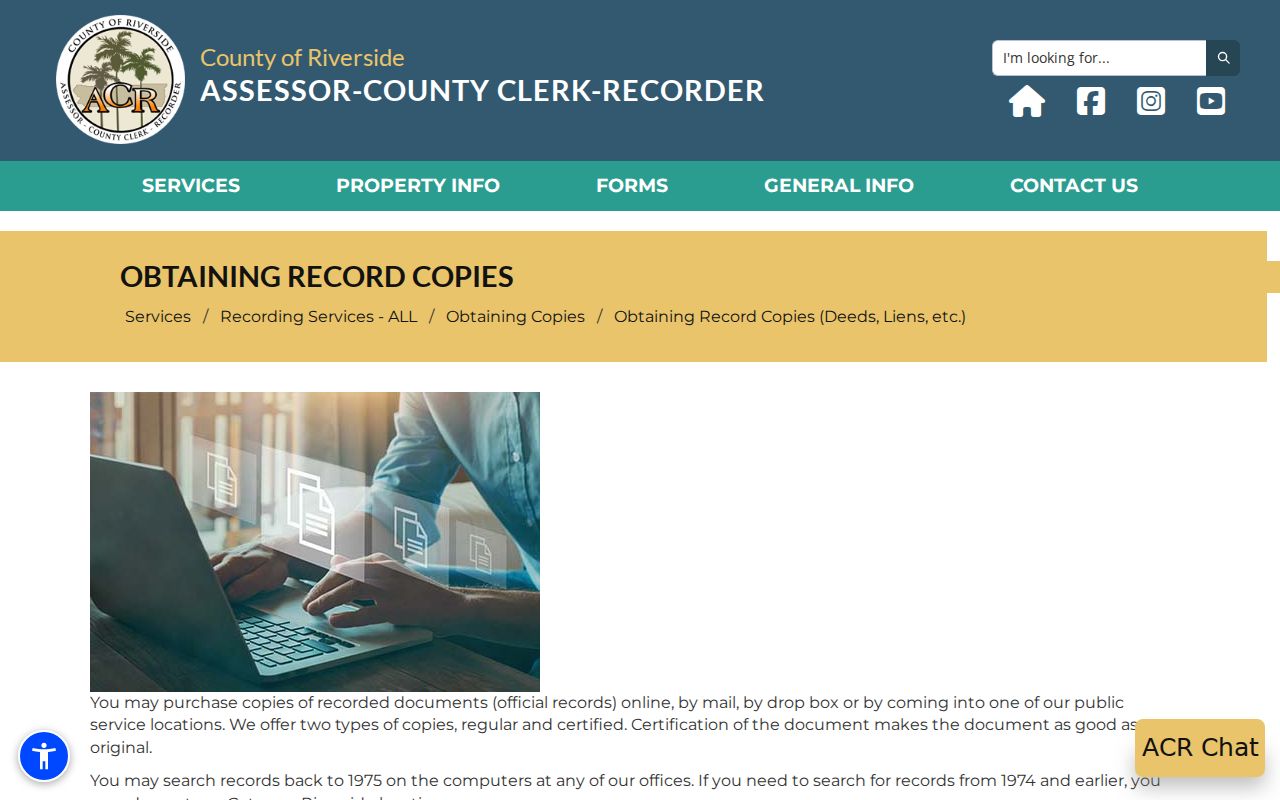
The copy-order image belongs at the end of the deed workflow. It shows the transition from a search clue to an official instrument.
Lawful use. Previous-resident research in San Jacinto is for house history, family history, estate work, and personal curiosity. Do not use a past address to stalk, harass, intimidate, or harm a living person.